Mobile MRI/CT viewer
Healthcare records platform (contract).
First image on device in under 2 s · 57 of 68 UAT defects closed (31/31 on mobile)
- React Native
- Cornerstone3D
- DICOMweb
- Express
- AWS
Gallery
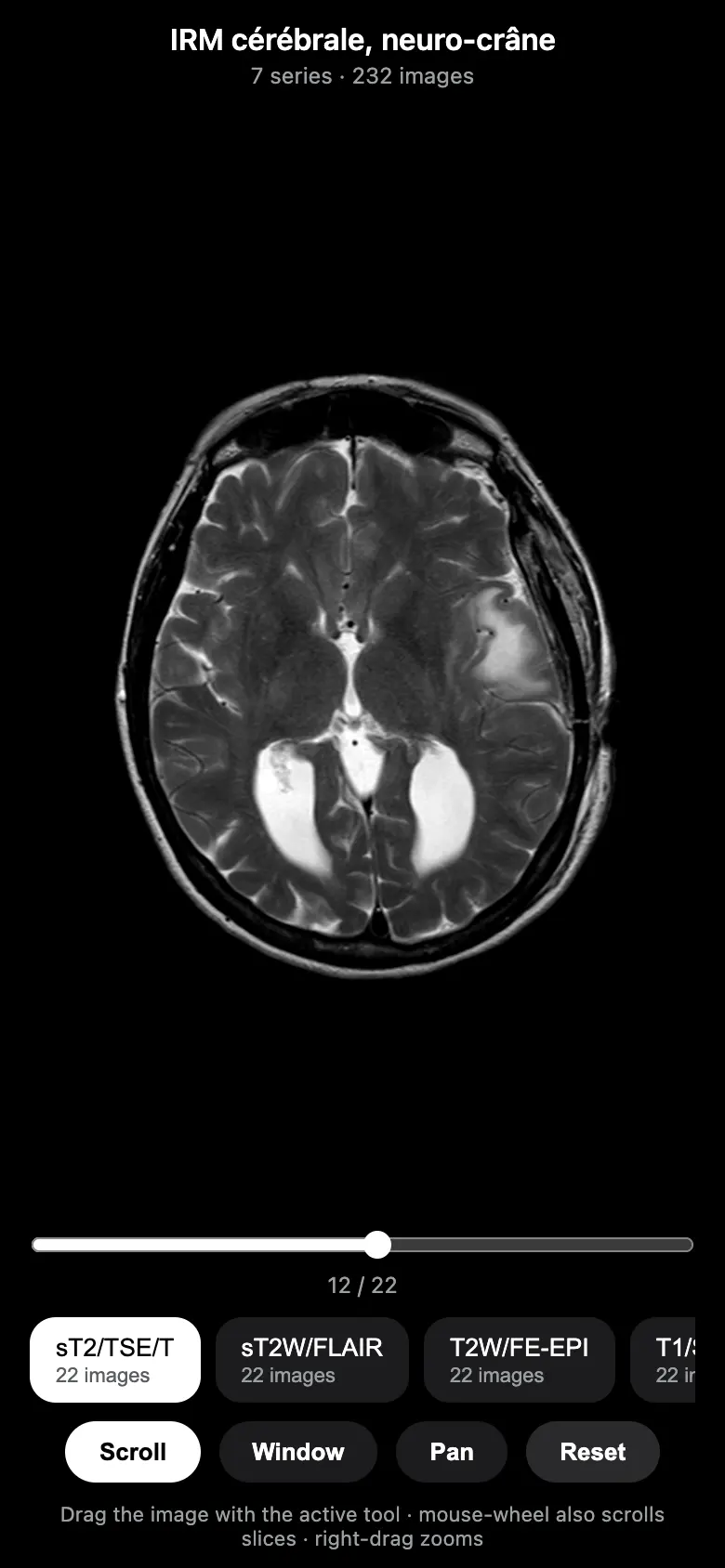
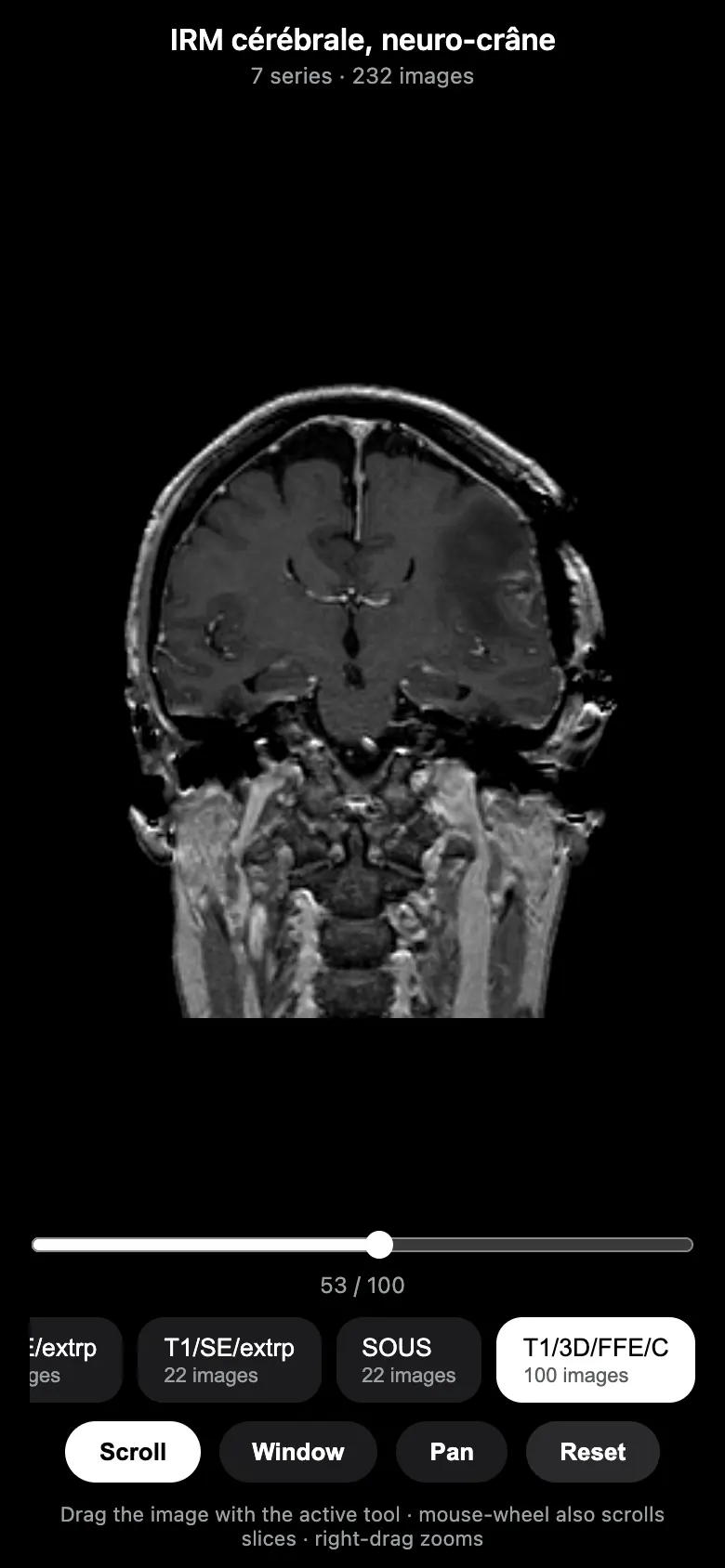
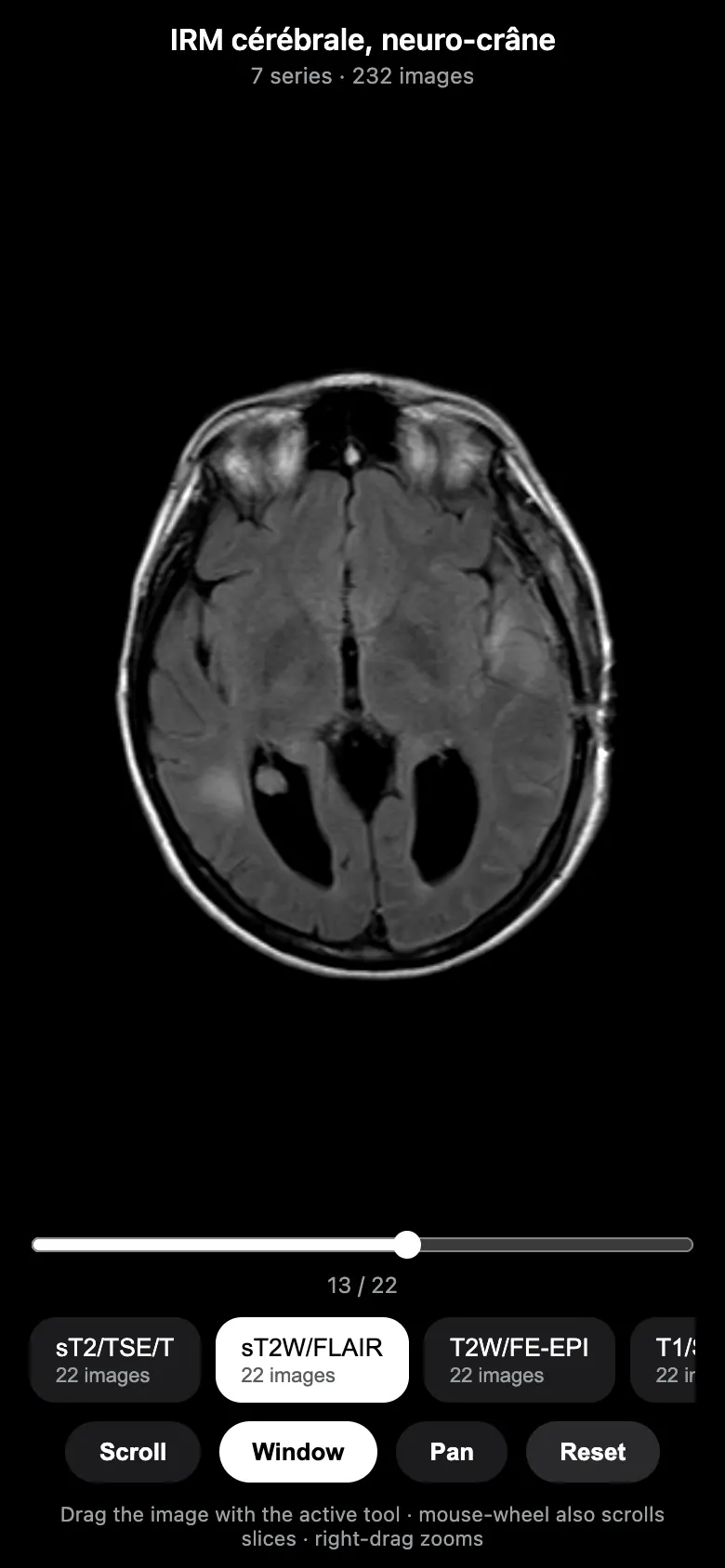
The problem
Clinicians on a healthcare records platform couldn’t view MRI or CT scans on their phones. The platform’s imaging viewer was a three-year-old fork that predated touch support, so the viewport was dead on mobile.
What I built
Rather than a risky major upgrade that the web and admin apps also depended on, I built a small, modern Cornerstone3D viewport as its own build and moved every control a user touches into native React Native: series chips, a slice scrubber, scroll / window-level / pan tools and reset.
How it works
The app fetches the study’s DICOMweb manifest, parses it into series, and pushes a stack of image IDs into the WebView over a thin message bridge — loadStack, setSlice, setPrimaryTool, reset — and the page reports back ready, stackLoaded, slice or error. Gestures map to tool groups: one finger for the active tool, pinch to zoom, three fingers to scroll.
Outcome
MRI and CT studies render on device with the first image in under 2 seconds. Alongside it I closed 57 of 68 open UAT defects (all 31 on mobile), rebuilt authorization across 156 API routes to derive privilege from the database, and stood up the platform’s first iOS release path.
Sample study: BRAINIX, from the OsiriX / Orthanc public DICOM sample library — for teaching and demonstration.